


Commercial Bike Forks: Precision OEM/ODM Solutions for Bike Brands & Distributors
We produce performance carbon, aluminum alloy, and steel bicycle forks engineered for commercial bike assembly and global component distribution. Built to ISO 4210 standards, our forks deliver structural steering integrity, precise rake tolerances, and reliable fatigue resistance for road, gravel, mountain, and e-bike framesets.

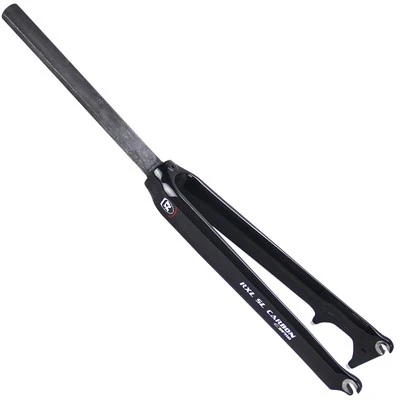
Product Types & Categories
|
Product Type |
Applications |
Key Features |
Primary Material |
|
Rigid Carbon Road & Gravel Fork |
Road Racing & All-Road Bikes |
Lightweight construction with internal hydraulic hose routing |
Toray T700 / T800 Carbon |
|
Suspension-Corrected Mountain Bike Fork |
XC & Trail MTBs |
High-stiffness lower-leg interface and reinforced steerer junction |
AL7075-T6 / Toray Carbon Hybrid |
|
Urban Commuter & E-Bike Rigid Fork |
City & Electric Bikes |
Integrated fender mounts and heavy-duty cable routing channels |
AL6061-T6 Alloy / CroMo Steel |
|
Suspension Fork Lower Leg Casting / Structure |
Trail & Enduro MTBs |
Precision CNC-machined arch and slider interfaces for damping systems |
Magnesium Alloy / AL7075-T6 Stanchions |
2.Specifications & Options
Geometric Dimensions
|
Parameter |
Available Specifications |
|
Steerer Tube Options |
Tapered 1-1/8" to 1-1/2"; Straight 1-1/8" |
|
Axle Standards |
Thru-Axle: 12 × 100 mm, 15 × 110 mm Boost; Quick Release: 9 × 100 mm |
|
Brake Mounts |
Flat Mount (Road/Gravel); Post Mount (MTB, 160 mm / 180 mm direct) |
|
Fork Offset (Rake) |
45 mm, 50 mm, 55 mm |
|
Maximum Tire Clearance |
Up to 700 × 47C (Gravel); 29 × 2.4" (MTB) |
Mechanical Specifications
|
Parameter |
Specifications |
|
Weight Range |
Carbon Rigid: 380–480 g; Alloy Rigid: 750–950 g; Suspension Chassis: 1,600–2,100 g |
|
Steerer Tube Wall Thickness |
Variable butting: 2.2 mm at crown junction to 1.5 mm at upper tip |
|
Maximum Stem Clamp Torque |
Carbon Steerer: 5.0 Nm max; Alloy Steerer: 6.0 Nm max |

High-Modulus Carbon Fiber Series
Raw Material: Torayca T700 and T800 unidirectional carbon prepreg sheets.
Molding Process: EPS (Expanded Polystyrene) internal mandrel molding combined with bladder pressure curing. This eliminates internal resin pooling and maintains uniform wall thickness through the crown and fork blade transition.
Steering Integration: Continuous carbon fiber layering from the dropout up through the tapered steerer tube to eliminate weak bonding joints.
Aluminum Alloy & Steel Series
Raw Material: Seamless extruded AL6061-T6, high-tensile AL7075-T6, and 4130 CroMo steel tubing.
Forming Process: 3D mechanical multi-butting and precision robotic welding or hydraulic crown pressing to reinforce high-stress steering transition zones.
Surface Treatment: Shot-peened to eliminate surface micro-cracks, followed by Type II hard anodizing or EDP rust-preventative coating.
OEM/ODM & Customization
Private Labeling & Graphics
Laser-etched graphics, water transfer decals under clear coat, custom pantone paint matching, and integrated badge plates.
Custom Engineering
3D CAD modeling, FEA (Finite Element Analysis) stress simulation for front-end impact loads, and rapid prototyping for custom rake and axle-to-crown dimensions.
Packaging Solutions
Individual protective EPE foam molded inserts, reinforced cartons, and master packaging structured for palletized container shipping.
Every production batch undergoes structural testing in our in-house laboratory, exceeding ISO 4210 requirements for bicycle steering systems.
Production Quality Workflow
Raw Material Verification - Mandrel / CNC Forming - 100% Dimensional Check - Fatigue & Impact Testing - Final Inspection
Key Laboratory Tests
Drop Weight Impact Test: 22.5 J front-end impact testing on the dropout and blade structure to evaluate structural fracture limits.
Steering Fatigue Test: 100,000 dynamic cyclic load repetitions applied to the steerer tube and crown interface.
Braking Torque Fatigue Test: Simulated disc brake rotational loading applied to the fork leg to verify mount shear resistance.
Dimensional Inspection: 100% gauge check on steerer diameter, axle spacing tolerances (+/- 0.05mm), and brake mount alignment.

MOQ, Lead Time & Packaging
|
Parameter |
Standard Aluminum / Steel Series |
Standard Carbon Series |
Custom ODM Molds |
|
Minimum Order Quantity (MOQ) |
200 pcs / size |
50 pcs / size |
300 pcs total |
|
Production Lead Time |
35–45 days |
40–50 days |
60–75 days, including tooling |
|
Sample Lead Time |
10 days |
15 days |
30 days |
|
Standard Packaging |
Individual EPE foam sleeve protection |
Individual EPE foam sleeve protection |
Confirm based on custom requirements |
|
Export Carton |
5-ply corrugated export carton |
5-ply corrugated export carton |
Confirm based on order requirements |
|
Packing Quantity |
10 pcs / carton |
10 pcs / carton |
Confirm based on order requirements |
|
Carton Dimensions |
95 × 35 × 25 cm |
95 × 35 × 25 cm |
Confirm based on order requirements |
|
Average Gross Weight |
12.0 kg / carton |
12.0 kg / carton |
Confirm based on order requirements |

RFQ Call To Action
Request a Volume Quote or Technical Drawing
Contact our engineering team to request CAD files, laboratory test reports, or volume pricing for OEM/ODM orders.
Email: info@rxlsl.com
Direct Line: +86-17352807667
Response Time: Engineering inquiries and formal quotations sent within 24 business hours.
Required Inquiry Details: Desired quantities, steerer type, axle standard, brake mount type, and branding requirements.
We're well-known as one of the leading bike fork manufacturers and suppliers in China, also support customized service. Please feel free to buy high quality bike fork for sale here from our factory. For more information, contact us now.